Handling Defiance Calmly: Staying Steady When Emotions Run High
Date: August 20, 2026
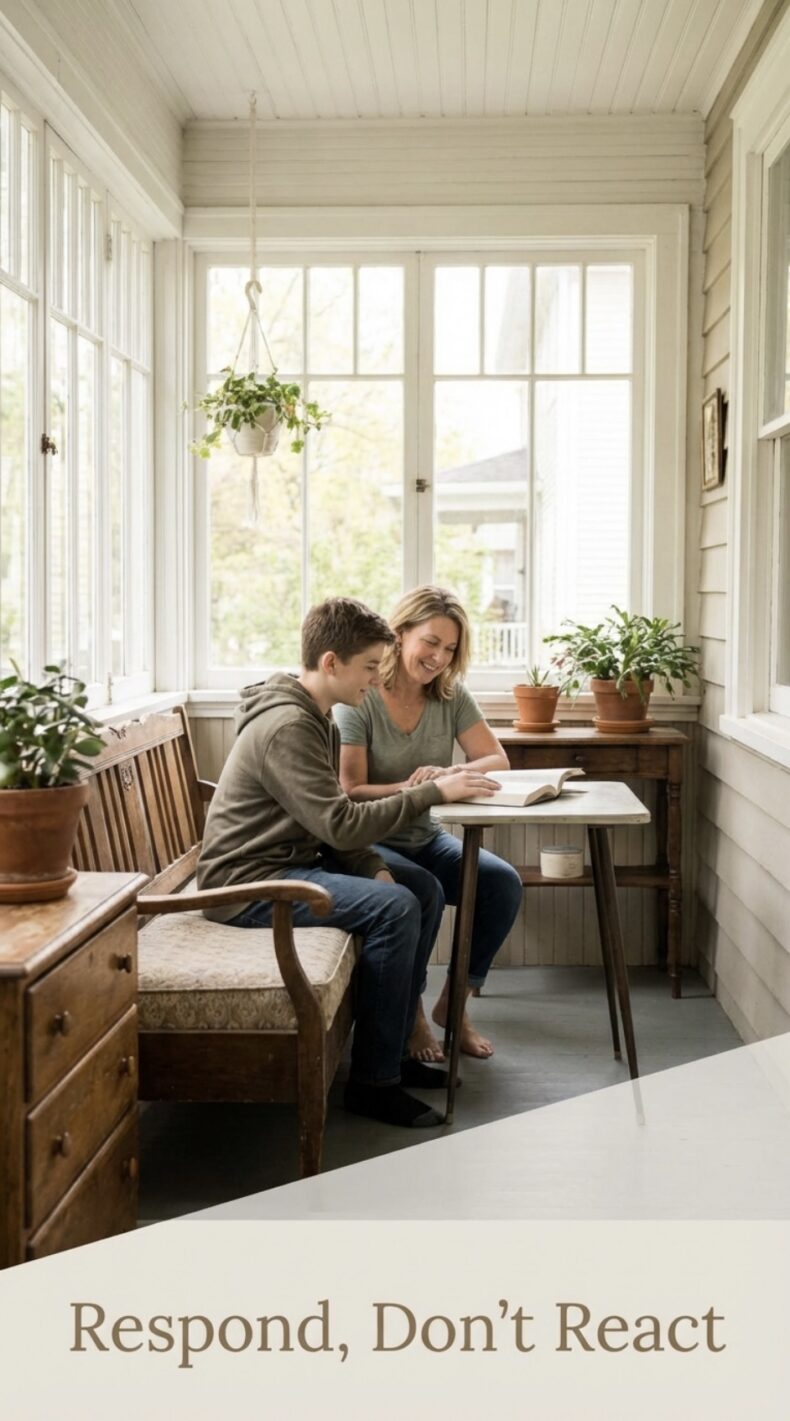
I still remember the first time one of my kids looked at me and said, “No,” with that unmistakable teenage edge. Not the toddler kind of no. Not the playful kind. The firm, sharp, eye-contact-holding kind.
It caught me off guard.
It wasn’t just the word. It was the tone. The independence in it. The subtle challenge. In that moment, I felt a mix of emotions—surprise, frustration, maybe even a little hurt. It’s amazing how quickly defiance can feel personal.
Most parents know that feeling. The eye roll. The heavy sigh. The refusal to move when you’ve asked three times already. In the moment, it can feel like disrespect. Like rejection. Like something is slipping out of your control.
But over time, I’ve learned that those moments deserve a pause before a reaction.
Adolescence is a season of stretching. Teens are pushing toward independence while still needing guidance. According to the American Psychological Association, boundary-testing is a normal part of development during these years (APA, n.d.). Pushing back doesn’t automatically signal failure—yours or theirs. Often, it signals growth happening in real time.
That doesn’t mean defiance should be ignored. It means it should be understood.
I once spoke with a father who described nightly homework battles with his son. Every evening felt like a showdown. His son delayed, argued, and sometimes flat-out refused to begin. The father tightened rules. He raised his voice. The cycle intensified.
When they finally slowed down enough to talk instead of react, something unexpected surfaced. The teen wasn’t lazy. He was embarrassed. He had fallen behind in one subject and didn’t want to admit he didn’t understand the material. What looked like defiance was actually shame.
The Child Mind Institute notes that defiant behavior can often stem from anxiety, stress, fatigue, or feeling misunderstood (Child Mind Institute, n.d.). Behavior is communication. When we respond only to the surface, we sometimes miss what’s underneath.
I’ve had to remind myself of that more than once.
In heated moments, it’s tempting to win. To match tone with tone. To assert authority quickly and decisively. But defiance thrives in power struggles. The American Academy of Child and Adolescent Psychiatry recommends calm, consistent limit-setting rather than reactive discipline (AACAP, 2023). Emotional escalation—yelling, sarcasm, consequences delivered in anger—often fuels more resistance.
Calm does not mean permissive. It means steady.
There’s a difference between saying, “You are so disrespectful,” and saying, “I can see you’re frustrated, but speaking that way isn’t okay.” That small shift matters. Guidance shared in Psychology Today explains that teens are more receptive when they feel heard before being corrected (Psychology Today, n.d.). Validation doesn’t mean agreement. It means acknowledging emotion.
And sometimes, it means pausing the conversation entirely.
I’ve learned that I don’t have to resolve every conflict in the moment it happens. When emotions are high—mine included—space can be the most productive response. A calm follow-up later often goes further than an immediate lecture.
Consistency also plays a quiet but powerful role. The Verywell Family highlights that predictable expectations and follow-through build credibility over time (Verywell Family, n.d.). Teens may not always like limits, but they tend to respect boundaries that are steady and fair.
Of course, there are times when defiance goes beyond typical pushback. When it is persistent, intense, and disruptive across multiple areas of life, it may signal something deeper. AACAP (2023) notes that ongoing oppositional behavior that significantly impacts home, school, and peer relationships can warrant professional evaluation. Seeking support in those moments isn’t an admission of defeat. It’s a form of care.
For most families, though, defiance shows up in waves. Some days feel calm and connected. Others feel like emotional thunderstorms.
What I keep coming back to is this: our steadiness becomes their model.
Handling defiance calmly is not about suppressing frustration or pretending it doesn’t affect you. It’s about choosing your response instead of reacting impulsively. It’s about showing what regulation looks like in real time. And yes, there will be moments when we don’t get it right. I’ve had to circle back more than once and say, “I’m sorry for my tone. Let’s try that again.” Repair, in many ways, teaches more than perfection.
The goal isn’t to eliminate defiance entirely. Independence requires friction. Growth requires tension. The goal is to teach our teens how to navigate conflict and limits without losing connection.
When we remain steady—even when emotions run high—we become the anchor in the room. And over time, that steadiness helps them build their own.
Long after the eye rolls fade and the arguments quiet, what remains is the example we set.
And that lesson lasts far beyond the argument.
References
American Academy of Child & Adolescent Psychiatry. (2023). Oppositional defiant disorder and disruptive behavior disorders. https://www.aacap.org
American Psychological Association. (n.d.). Adolescence and autonomy: Understanding teen behavior. https://www.apa.org
Child Mind Institute. (n.d.). What to do when your teen is defiant. https://childmind.org
Psychology Today. (n.d.). How to deal with defiance in teens. https://www.psychologytoday.com
Verywell Family. (n.d.). How to respond when a teen disobeys you. https://www.verywellfamily.com