The Healing Power of Art and Creativity — Processing Emotions and Building Hope
Date: July 13, 2026
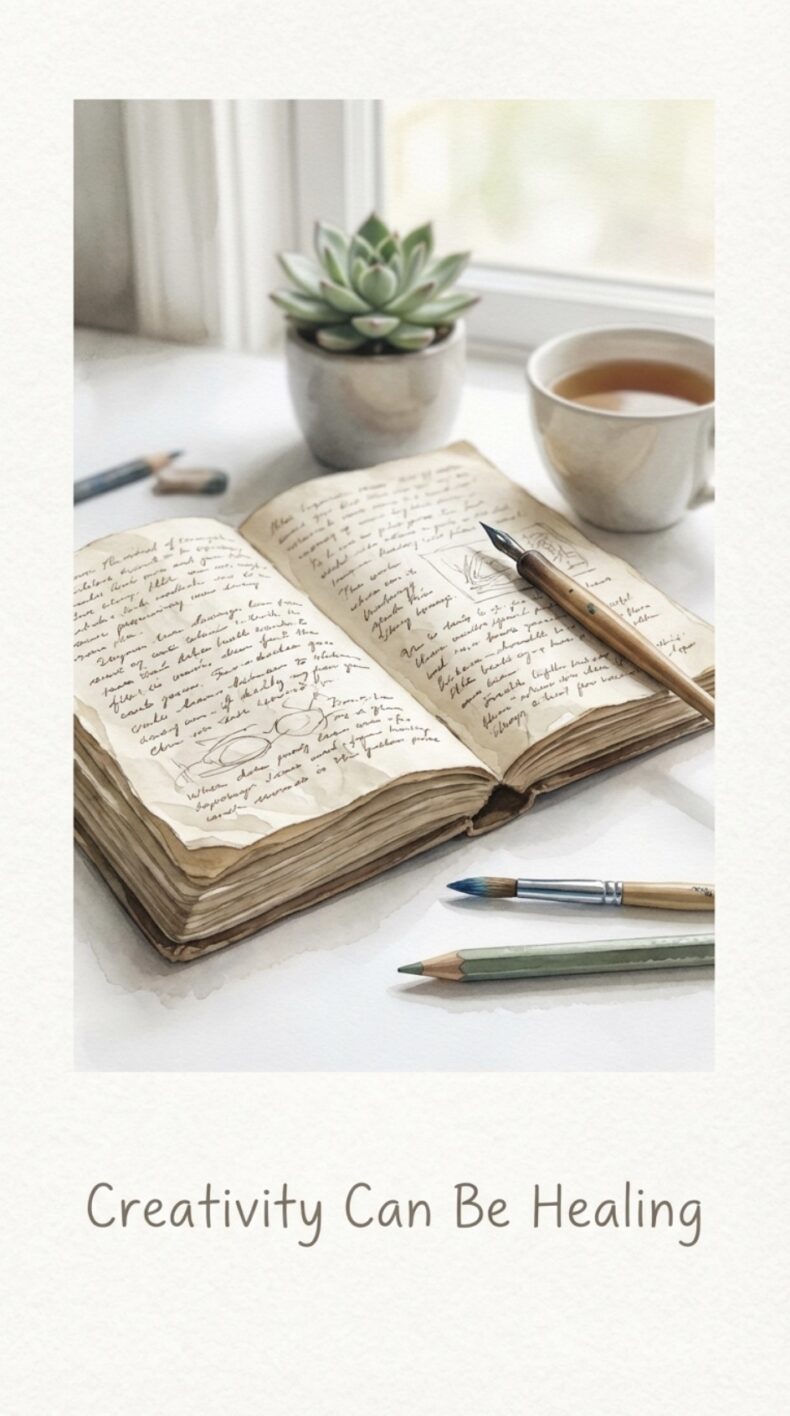
If you’ve ever lost yourself in a painting, scribbled your thoughts in a journal, or spent an evening piecing together a craft project, you probably already know this: creativity has a way of helping us breathe again. It doesn’t matter whether you consider yourself an artist or not—what matters is the act of making, of bringing something new into the world, and in the process, finding something new within yourself.
I still remember the year when everything in my life seemed to go wrong—one of those seasons where every day brought a new challenge. At the time, I was directing a musical, and honestly, it became my lifeline. Being creative every single day—designing scenes, shaping characters, collaborating with others—helped me stay the course when everything else felt like it was falling apart. The ability to build something beautiful out of chaos gave me a sense of control and hope. Looking back, that show ended up being one of my most creative productions and one of my absolute favorites to direct. It reminded me that even in the hardest times, the act of creating can hold us together when words or logic can’t.
I’ve seen that same quiet transformation in others, too. A friend of mine began writing fan fiction during one of the most stressful times in her life. What started as a small creative escape quickly became her outlet—a space where she could rewrite stories, explore emotions, and build worlds that felt safe and full of possibility. Through her writing, she found a way to process everything she was carrying without having to name it directly. Over time, those stories became more than fiction; they became a map of her resilience and a reminder that even in chaos, creativity can create order, meaning, and hope. Another parent I know said her son, who rarely spoke about his emotions, began writing short stories about superheroes who could fix things that seemed unfixable. Through those stories, he was able to express what he couldn’t yet say out loud.
And there’s science to support what so many of us have experienced firsthand. Research on art therapy shows that creative expression—whether through painting, movement, writing, or other art forms—can help people process complex emotions and foster self-understanding (Haeyen et al., 2021; Kaimal & Ray, 2017). Engaging in art can also activate regions of the brain linked to emotion regulation, reward, and meaning-making, supporting mental and emotional balance (Bolwerk et al., 2014). While creativity doesn’t erase pain or solve every problem, studies suggest it can offer a healthy way to engage with feelings that might otherwise stay bottled up.
The beauty of art and creativity is that there’s no “right” way to do it. You don’t need an easel, a dance studio, or fancy supplies. You can start where you are—with what you have. Maybe that means doodling while you wait for an appointment, writing a letter you never send, dancing in your kitchen to your favorite song, or snapping photos of small, beautiful things on your daily walk. These little moments of creation can give us a sense of presence, grounding, and even hope.
What I’ve learned is that creativity isn’t about perfection—it’s about permission. Permission to feel, to make mistakes, to play, and to discover. It’s about giving our hearts and minds space to process what words can’t always capture.
So maybe today, you pick up that pen or brush or camera—not to make something “good,” but simply to make something true. You might be surprised at how healing that can be.
Because sometimes, art doesn’t just help us express what’s inside—it helps us find our way back to ourselves.
References
Bolwerk, A., Mack-Andrick, J., Lang, F. R., Dörfler, A., & Maihöfner, C. (2014). How art changes your brain: Differential effects of visual art production and cognitive art evaluation on functional brain connectivity. PLoS ONE, 9(7), e101035.
Haeyen, S., van Hooren, S., van der Veld, W., & Hutschemaekers, G. (2021). Promoting mental health through art therapy: A review of current research. Frontiers in Psychology, 12, 686987.
Kaimal, G., & Ray, K. (2017). Free art-making in an art therapy open studio: Changes in affect and self-efficacy. Arts & Health, 9(2), 154–166.