When Everything Felt Off: Understanding the Hormonal Whirlwind of the Teen Years
Date: April 30, 2026
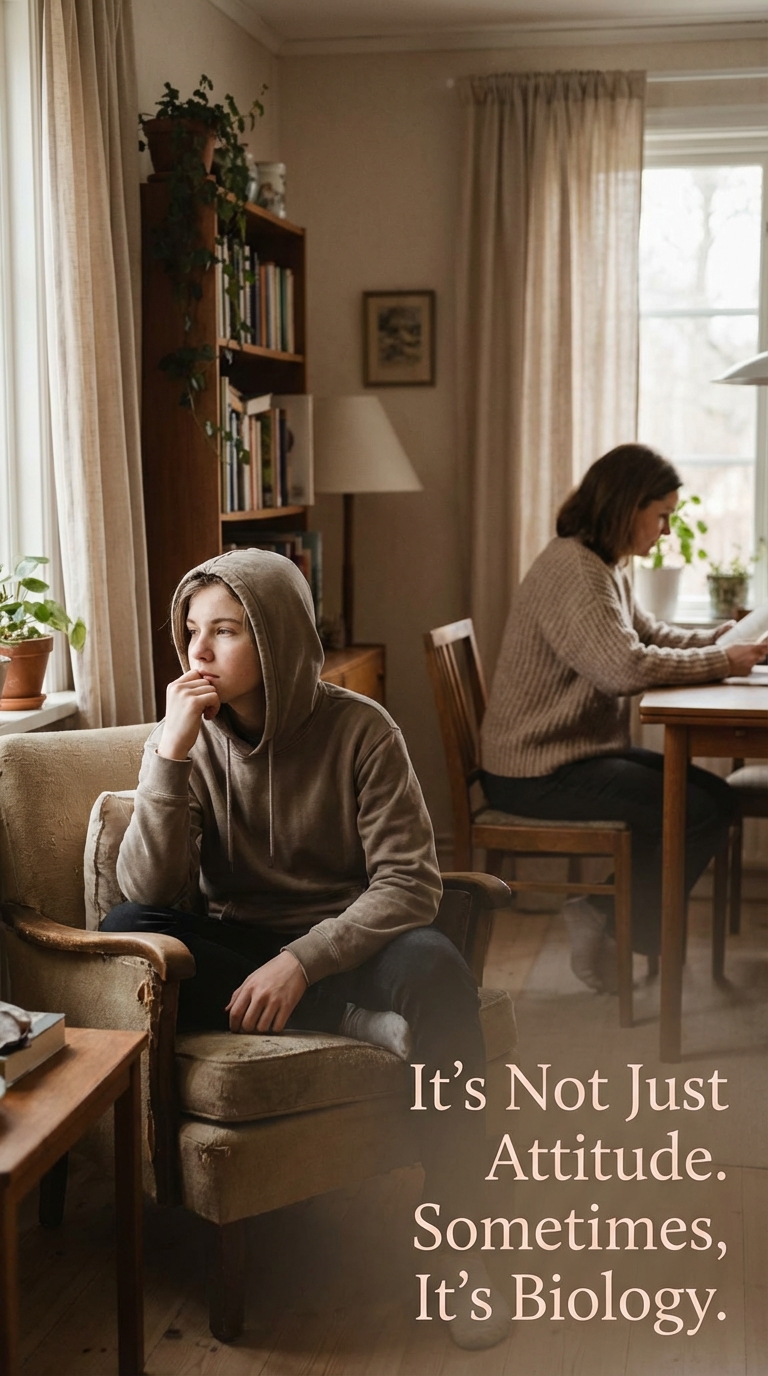
I still remember the mornings when my daughter would come downstairs looking like someone had stolen her sunshine. No “good morning,” no eye contact—just a huff, a blank stare, and a frustrated “Why is everyone so loud?” The funny thing was, no one had even said a word.
Around the same time, my son—then early in his teens—would sometimes retreat into silence, slamming doors or shrugging off any attempt to talk. He wasn’t angry at us; he just seemed overwhelmed by feelings he couldn’t name or explain.
Back then, I used to wonder: What invisible tripwire had we hit? Was it something at school? Was it exhaustion? Overwhelm? The answer I came to over time was this: Sometimes, it was just hormones.
We often focus on the visible signs of puberty—height changes, new curves, deeper voices, or the occasional breakout. But beneath those surface shifts are powerful hormonal surges quietly reshaping emotions and moods.
For girls, hormones like estradiol rise dramatically and have been linked to mood swings, heightened sensitivity, and even depressive symptoms—sometimes well before physical changes become obvious (Blakemore et al., 2016).
For boys, it’s more complicated than just “testosterone = aggression.” Research reveals that boys with lower testosterone during mid-puberty report more depressive symptoms, while those with average or higher levels often feel more emotionally stable (Culbert et al., 2022). Testosterone alone doesn’t explain mood swings; context and social environment matter a lot. Boys with positive peer groups may channel those hormones toward leadership and confidence, while others might struggle more.
For girls who mature earlier than their peers, things can feel even heavier. Research shows early-maturing girls are at increased risk for emotional distress—not just because their bodies are changing faster but because their brains and coping skills aren’t quite ready for the emotional load (Carter et al., 2016).
Many girls develop a ruminative coping style—replaying negative thoughts instead of moving past them. Watching her get stuck in that cycle was painful, but I learned that being a calm, steady presence made a difference even when she couldn’t show it.
Emotional shutdowns in boys can be confusing at first. They might not talk much, and when they do, their words can be clipped or frustrated. Learning about the hormonal changes and emotional challenges boys face helped me understand that it’s not just teenage attitude or laziness—hormones and environment often interact in complex ways.
One breakthrough for many parents is simply showing up—whether it’s going on solo runs, spending quiet time together, or just being present without pressuring them to talk. Over time, that steady presence can help ease tension and encourage boys to open up more.
Looking back on those unpredictable mornings, the emotional shutdowns, and the quiet car rides filled with tension, I know now that those weren’t failures—they were growing pains. Hormonal changes made everything feel amplified in our house, and while I couldn’t always control the chaos, I could choose how I responded to it.
Over time, I found a few strategies that made those tough seasons more manageable—not just for my kids, but for me. And the best part? Research backs them up. These aren’t just things that felt helpful—they’re grounded in science about emotional development, parenting, and adolescent mental health.
Here are a few approaches that helped us stay connected, even when everything felt off:
Name It Without Blame
I’d gently say, “Looks like hormones might be messing with you today.” That simple acknowledgment helped put a name to what felt invisible, without making them feel “wrong” for having big feelings. Naming emotions is the first step in helping teens regulate them—and science agrees.
Keep Showing Up
Even when they pushed away, I stayed nearby—watching a movie together, driving quietly, or leaving the door open with, “Come talk if you want.” Just knowing I was there created a sense of safety and trust, even in silence.
Encourage Healthy Outlets
Journaling, art, physical activity, or in our family music is healing. Time to listen, move or sing along with their favorite songs helped a lot. These tools helped them process emotions without needing to explain everything right away.
Look for Patterns, Not Just Moments
A bad day is normal. But when I started noticing emotional shifts tied to cycles, school stress, or friend drama, I could respond with more empathy and less panic. Recognizing patterns helped us decide when to ride it out—and when to seek extra support.
Stay Calm—Even When It’s Hard
I won’t lie: staying calm during emotional storms was tough. But I learned that my own regulation mattered. The more I responded with patience and curiosity, the more my teens felt safe to bring their full selves to me—even the messy parts. Plus it gave me a chance to lead by example. Research shows our calm reactions teach teens how to manage their own emotions.
Puberty brought a whirlwind of emotion into our home. But what got us through wasn’t perfection—it was presence. Being consistent. Listening more than lecturing. And showing up, day after day, even when things felt tense or unpredictable. Now I can see how those small, steady choices added up. The emotional storms didn’t last forever—but the trust we built during them did.
If you’re in the thick of it, take heart: your calm, your care, and your commitment matter more than you know. And you don’t have to guess your way through it—science is on your side, too.
References
Allen, J. P., & Tan, J. S. (2016). The multiple facets of attachment in adolescence. In Handbook of Attachment (3rd ed.).
Bandura, A. (1977). Social Learning Theory. Prentice-Hall.
Beetz, A., et al. (2012). Psychosocial and psychophysiological effects of human-animal interactions: The possible role of oxytocin. Frontiers in Psychology, 3, 234.
Blakemore, S.-J., Burnett, S., & Dahl, R. E. (2016). Perception and recognition of faces in adolescence. Developmental Cognitive Neuroscience, 17, 11–24. https://doi.org/10.1016/j.dcn.2015.05.005
Carter, R., Silverman, W. K., & Jaccard, J. (2016). Race and the role of puberty in the emergence of internalizing disorders. Journal of Clinical Child & Adolescent Psychology, 45(5), 686–700. https://doi.org/10.1080/15374416.2015.1015133
Culbert, K. M., et al. (2022). Pubertal emergence of testosterone effects on depressive symptoms in boys. JCPP Advances.
Gottman, J. M., Katz, L. F., & Hooven, C. (1996). Parental meta-emotion philosophy and the emotional life of families. Journal of Family Psychology, 10(3), 243–268.
Lieberman, M. D., et al. (2007). Putting feelings into words: Affect labeling disrupts amygdala activity in response to affective stimuli. Psychological Science, 18(5), 421–428.
Lubans, D. R., et al. (2016). Physical activity and adolescent mental health: A systematic review. Preventive Medicine, 76, 55–66.
Pizarro, J. (2004). The efficacy of written emotional expression: A meta-analysis. Psychological Science, 15(5), 362–368.
The Family Dinner Project. (n.d.). Why family dinners matter. Retrieved from https://thefamilydinnerproject.org/about-us/why-family-dinners-matter/