Part 2: Finding the Courage to Get Help
Date: June 15, 2026
There’s a moment every parent dreads — the one where you realize that love alone might not be enough. You’ve tried talking, listening, setting boundaries, giving space, and showing up over and over again. And yet, something still feels broken.
That was where my friend found herself. After months of watching her daughter slip further away — missing school, shutting down, and losing touch with the things she used to care about — she finally faced the question no parent wants to ask: Do we need more help than I can give at home?
Making that decision took everything she had.
The Weight of Uncertainty
When a child is struggling, the line between “a rough patch” and “something more serious” isn’t always clear. Parents often worry about overreacting or making things worse by seeking help. But what I’ve learned — from both experience and research — is that reaching out early can make a real difference.
Studies have found that parental recognition of mental health issues and early engagement with professional support can improve outcomes for teens (Reardon et al., 2017). But for many families, the biggest barrier isn’t access — it’s fear. Fear of judgment. Fear of being blamed. Fear that asking for help means you’ve failed as a parent (Corrigan et al., 2014).
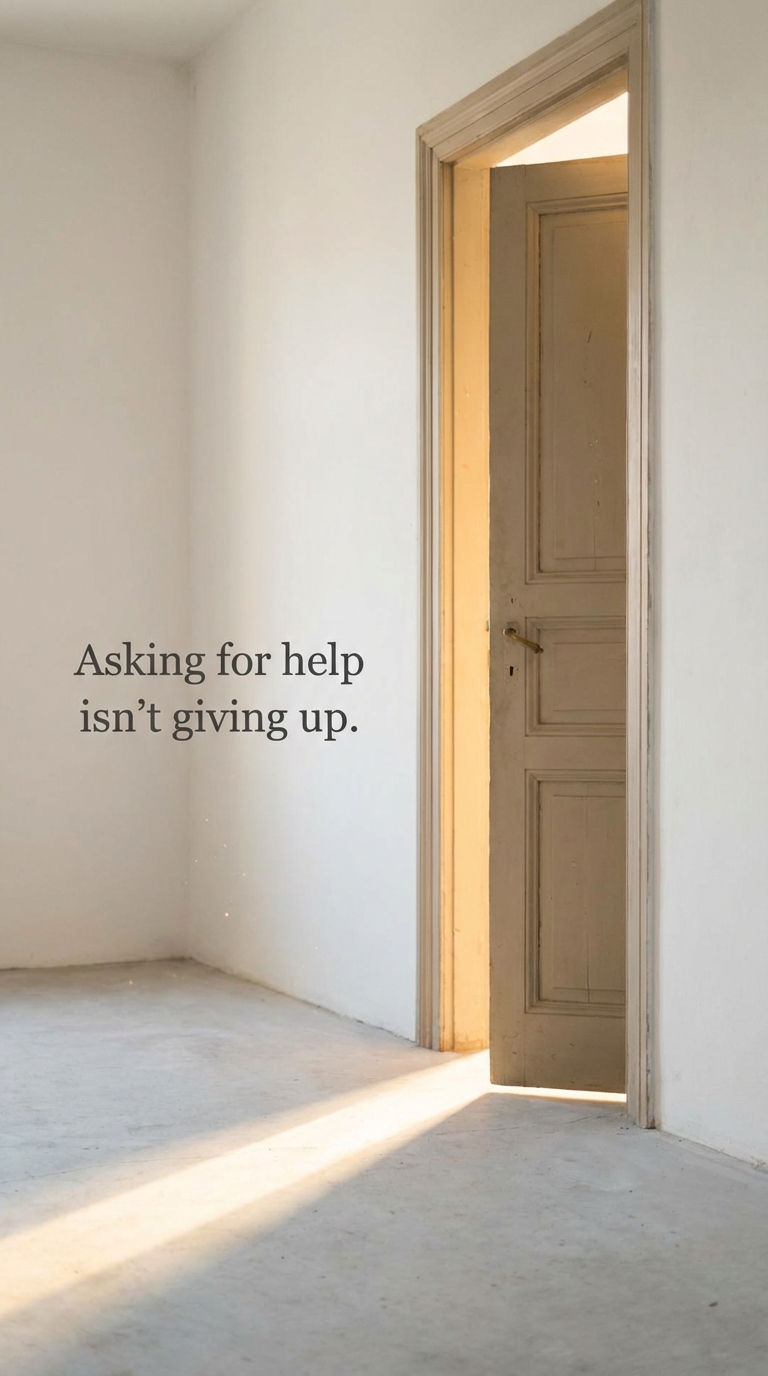
Asking for Help Isn’t Giving Up
My friend told me she cried the day she called the treatment center. Not because she doubted her choice, but because she finally allowed herself to admit how hard it had all been. She said, “It felt like surrendering — but not in a bad way. It was surrendering to love. To doing whatever it takes to get my daughter back.”
That kind of courage doesn’t come from perfection. It comes from love, persistence, and the willingness to put your child’s healing ahead of your pride or fear.
Getting help might look different for everyone. For some, it’s reaching out to a school counselor or family therapist. For others, it might mean enrolling their child in a day treatment or residential program. What matters most is taking that first step — however small — toward support.
The Turning Point
The day my friend’s daughter entered the day treatment program, there were tears — from both of them. Her daughter didn’t understand why she had to go. She was angry, distant, and scared. But over time, she began to open up.
It wasn’t a quick or easy fix. Healing rarely is. But her mom said something that stuck with me: “Once we asked for help, we finally had a team — not just me trying to hold everything together alone.”
That’s what getting help really means. It’s not about losing control — it’s about not having to do it alone anymore.
References
Corrigan, P. W., Druss, B. G., & Perlick, D. A. (2014). The impact of mental illness stigma on seeking and participating in mental health care. Psychological Science in the Public Interest, 15(2), 37–70. https://doi.org/10.1177/1529100614531398
Reardon, T., Harvey, K., Baranowska, M., O’Brien, D., Smith, L., & Creswell, C. (2017). What do parents perceive are the barriers and facilitators to accessing psychological treatment for mental health problems in children and adolescents? European Child & Adolescent Psychiatry, 26(6), 623–647. https://doi.org/10.1007/s00787-016-0930-6