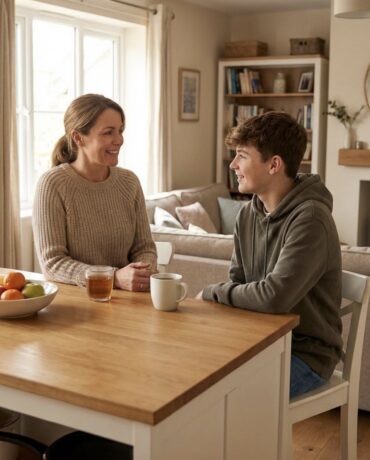
The Healing Side of Fandom
Date: July 27, 2026
K-pop, a world wide phenomenon and your teen is wearing the hoodie, the bracelet, the tour shirt. Their phone lights up with livestream notifications. They stay up watching comeback stages, unboxing albums, memorizing lyrics, reading fan theories, trading photocards, voting in polls, defending their favorite artist in comment sections, counting down to releases like holidays. They talk about members like friends. They save screenshots. They learn inside jokes. They ask for concert tickets instead of birthday parties.
Is it healthy for teens to be this invested in something?
That’s a question I hear often — and one I’ve quietly asked myself.
Whether it’s K-pop, sports teams, Marvel movies, anime, Comic-Con culture, or a long-running TV show like Supernatural, the intensity can feel overwhelming from the outside. The posters. The playlists. The late-night premieres. The emotional highs and lows tied to people they’ve never met.
We worry about obsession. About screen time. About unrealistic standards. About losing our kids to something we don’t fully understand.
But what if the better question isn’t “Why are they so into this?”
What if it’s “What is providing them?”
To understand why I ask that question now, you have to understand my daughter a little first.
When she was nine, she had debilitating migraines. We later learned they weren’t just migraines — they were anxiety manifesting physically. A third grader learning to track triggers, recognize symptoms, and manage pain isn’t something you ever picture as a parent. But she did it. Quietly. Bravely.
In sixth grade, her cousin — who was supposed to be her best friend — turned on her. The bullying spread. Other girls joined in. My daughter didn’t retaliate. She didn’t lash out. She endured. And somehow, she kept loving her cousin anyway.
By ninth grade, she had already carried more than most adults.
And then her dad left.
One day he was there. The next day he was gone.
I worked hard to hold it together for my kids. I thought if I stayed steady, they would too. But my daughter slipped into a darkness that scared me. She retreated. She disconnected. Some days she wanted nothing to do with the world — or with me. I was terrified she might make choices that would devastate her future.
And then one day, she found a Stray Kids video.
She felt something other than sadness.
So she watched another one.
And another.
That led to dance practices. Behind-the-scenes content. Other groups. Learning lyrics on replay. Suddenly her world wasn’t only pain. It was choreography. It was music. It was laughter. It was learning Korean phrases on her phone. And she wanted to tell me about it.
That’s when everything shifted.
Now, we are not strangers to fandom in our house. We love Disney. (We are obsessed with the parks.) We love Marvel. Manga. Anime. I am a long-time Supernatural fan. We’ve stood in line for things before. We’ve decorated rooms around things before.
But this felt different.
It sounds cliché to say it, but K-pop — and Stray Kids in particular — pulled her out of the darkest place she had ever been.
And because she wanted to share it with me, I dove in.
Not because I understood it.
But because I understood her.
Is This Really About K-Pop — or About Belonging?
As I started learning about K-pop fandom, I also started asking a bigger question:
Is this really different from other fandoms in the U.S. — or does it just look different?
Research on fandom shows that across genres — music, sports, television, comics — strong fan communities operate similarly. Fans don’t just consume content. They create, connect, organize, and build identity around shared interests. Psychologists refer to this as social identity — the human need to belong to something bigger than ourselves.
Teens, especially, are wired for this. They’re asking, “Where do I fit?” Fandom offers an answer.
What may feel unique about K-pop is its digital intensity. Coordinated streaming. Voting campaigns. Direct fan communication. Constant content. The industry intentionally fosters closeness.
But sports fans organize playoff rituals. Comic-Con communities build elaborate costumes and travel across the country. Supernatural fans formed deeply connected online networks around actors and storylines. Every generation has had its version of intense devotion.
The shape changes but the psychology doesn’t.
What It Gave Us
Let’s go back and answer that question, “What is providing them?”
For my daughter, K-pop wasn’t obsession. It was oxygen.
It gave her connection.
It gave her creativity.
It gave her emotional language.
It gave her something to look forward to.
And maybe most importantly, it gave us a bridge back to each other.
Our conversations shifted. Our home filled with music. We had something to work toward together — concerts, choreography, shared playlists. It filled a silence that had once felt heavy.
Research supports what I watched happen. Strong fan communities can increase feelings of belonging and social connection. For teens navigating hardship, that sense of belonging can be protective.
For her, it was.
Where We Stay Careful
But no fandom — K-pop or otherwise — is automatically healthy.
Any intense interest can tip out of balance. We’ve seen it across music fandoms, sports culture, gaming communities, comic conventions — passion always carries potential risk.
Sleep can suffer.
Unrealistic beauty standards
Financial pressure.
Online spaces can blur into over-immersion.
Identity can start to hinge too tightly on something external.
In our house, we don’t pretend those risks aren’t real. We talk about them. We protect sleep, even when a comeback drops at midnight. We set spending limits and talk honestly about money. We discuss image editing, media literacy, and how entertainment is produced. We watch for signs of withdrawal from real-life relationships.
Not because the fandom is dangerous. But because parenting requires attention.
The difference isn’t eliminating passion. It’s staying present in it.
We don’t have to fear their interests.
But we do need to stay connected with them.
What I Didn’t Expect
If you had told me years ago that Korean pop music would become part of our healing story, I would have smiled politely and dismissed it.
But here we are.
K-pop didn’t fix everything. It didn’t erase trauma. It didn’t remove anxiety.
But it opened a door.
It gave my daughter something to move toward instead of only something to survive.
And it gave us something to share.
What I didn’t expect — what I don’t say often enough — is that it healed parts of me too.
When her dad left, I was focused on survival. Paying bills. Holding routines together. Being the steady one. I didn’t give myself space to feel much of anything. Joy felt distant. Community felt out of reach. I was exhausted in ways I couldn’t articulate.
When she invited me into her world — into dance practices, lyric translations, comeback countdowns — she wasn’t just sharing music. She was extending connection.
Through K-pop, I didn’t just reconnect with my daughter. I found community. I found conversations that weren’t about loss. I found laughter again. I found something that felt light when everything around us felt heavy.
Our home filled with music. It filled with shared excitement. It filled with something forward-looking.
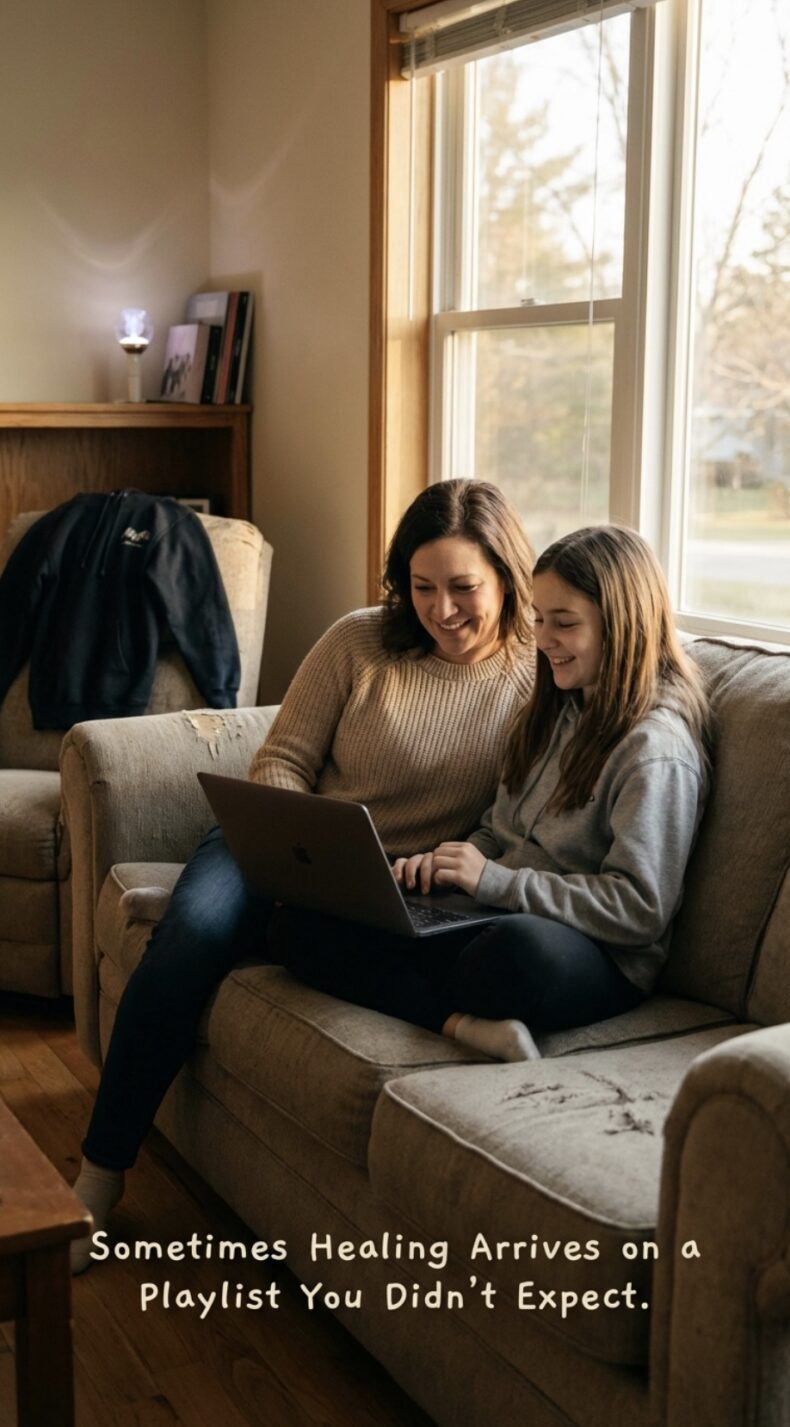
It reminded me that healing doesn’t always arrive through therapy offices and self-help books. Sometimes it arrives through choreography in the living room. Sometimes it arrives through learning fan chants in the car. Sometimes it arrives because your child says, “Mom, you have to see this.”
Fandom, at its best, offers belonging. At its worst, it can become escape.
The goal isn’t to panic about intensity. It’s to ask what need it’s meeting.
For us, it met the need for connection. For joy. For something to build together instead of something to grieve alone.
Sometimes what looks like obsession is actually restoration.
Sometimes what feels foreign is actually healing.
So, Stay curious. Stay present. Stay steady.
Because sometimes the thing we least understand becomes the bridge back to our child.
And sometimes healing arrives on a playlist we never expected.